Skip to content
View in the app

A better way to browse. Learn more.

ComicBase User Community

A full-screen app on your home screen with push notifications, badges and more.

To install this app on iOS and iPadOS
  1. Tap the Share icon in Safari
  2. Scroll the menu and tap Add to Home Screen.
  3. Tap Add in the top-right corner.
To install this app on Android
  1. Tap the 3-dot menu (⋮) in the top-right corner of the browser.
  2. Tap Add to Home screen or Install app.
  3. Confirm by tapping Install.

Doug MedicAR

Members
  • Joined

  • Last visited

Posts posted by Doug MedicAR

  1. 1 hour ago, Steven L. Dasinger said:

    You are missing my point. All the things you mention apply to the comic whether it is slabbed or not.
    I agree that they all affect the pricing of a comic.

    However, the act of slabbing doesn't multiply all of those items. There is not a premium for slabbing and being signed and 1st appearance. There is just a premium for being slabbed.

    The main problem that Pete is trying to address is that a flat rate percentage when applied to any CGC (or any graded comic) doesn't give a realistic example of the pricing with vast differences in pricing.

    Currently CB has a CGC 9.8 at 1200% of NM.

    Take a comic as graded by CGC at 9.8
    Take the same comic out of the casing.

    Example 1: Low priced comic
    If the un-slabbed comic sold for $100.00, the slabbed version would have a value of $1,200.00.

    Example 2: High priced comic
    If the un-slabbed comic sold for $1,000,000.00, the slabbed version would have a value of $12,000,000.00.

    For example 1, the $1,200.00 may or may not be accurate but it is probably near correct (plus or minus a few hundred).
    For example 2, the $12,000,000.00 is no where close to being an accurate representation of the price (plus or minus several hundred thousand dollars).

    That is the problem being addressed.
    One way I can thing of is to have different percentage of NM for various pricing ranges.
    For example (just making up numbers and is not meant to represent actual values):

    Between $1.00 and $999.00 have percentage of 1200%
    Between $1,000.00 and $4,999.00 have have percentage of 1200%
    Between $5,000.00 and $9,999.00 have have percentage of 1000%
    Between $10,000.00 and $49,999.00 have have percentage of 750%
    Between $50,000.00 and $99,999.99 have have percentage of 500%
    Between $100,000.00 and $499,999.00 have have percentage of 250%
    Between $500,000.00 and $999,999.00 have  have percentage of 175%
    Between $1,000,000.00 and $1,999,999.00 have have percentage of 150%
    Over $2,000,000.00 have $125%

    Again, these are just 'random' numbers and are just meant to show the general idea. They are not meant to be exact numbers.

    Using these numbers Example 2, at $1,000,000.00, when slabbed, would have a value of $1,500,000.00.
    Still significant but not outlandish.

    (And I will state this one more time. Any feature that would affect the price, would apply to the un-slabbed comic. They are important and affect the price. However, once that un-slabbed price is determined, the act of slabbing does add extra premium value beyond the act of slabbing.)

    If comics were simply being graded and slabbed, you would be right but signatures and scarcity, real or perceived, influence the price of the book.  Being a key will do it as well because keys attract buyers beyond the standard market.  Additional buyers create additional demand and the price becomes skewed.  There are collectors that won't touch a book without CGC or CBCS grading it first.  Their lack of interest in raws combined with regular collectors' interest in graded books leaves them competing for books from a smaller pool.  The end result is that a 9.8 key may be valued at 1500% of its raw counterpart while the next issue in the series only draws 900% of the raw price.  

    I get the impression you don't deal much in slabbed books.  I don't intend that as an insult but rather an observation based on the attempt to create a formula for all of this.  There is no multiplier that will work.  

    Let's use Dark Knight Returns #1 in CGC 9.8 as an example.  

    On April 11, a copy signed and remarked by Frank Miller and Klaus Janson sold for at least $3500.   It was bought with a best offer that eBay doesn't reveal.  

    On February 9, a copy signed by Miller and Janson came in at $2500

    On Aprill 9, a copy signed by Miller alone brought $2078.

    On March 30, an unsigned copy went for $1325

    There is a raw VF-NM copy on Atomic Avenue right now for $99, I'm sorry I don't CB with me at the moment so let's use $200 as the raw NM value.  

    They are all the same book in the same grade.  If you go to Mr. Miller's agent, the cost of a signature on a raw book is $50 and the cost for a book to be graded is $85.  By spending $85 and getting the book graded, the seller made an additional $600 but adding Klaus Janson's signature (I don't know his fees for certain but think he's in the $30-50 range) brought in about $1000 more for the seller.  Miller alone increased the price by 56%, Miller and Janson increased it by 88%, and sketches drove it up by 164% at a minimum.  Using the graded 9.8 price and adding signatures we go from $1325 to $1410 which is 6% for Miller.  Throw Janson in there and it goes to $1460 which is 10% higher.   The cost of the signatures is left behind by the final graded price.  Meanwhile the signed raw book might bring $300, I don't have one that has sold recently to reference.  There are two for sale on eBay now that look like terrible fakes to me, one at $400 and one starting at $70.  

    Because they have strict rules for their witnesses, CGC has a solid reputation in the autograph business.  That reputation adds value to the final product beyond the cost of the upgrades.  The buyer pays for more than some ink smeared on a book, they pay for the assurance that what they are buying is genuine.  They also are paying for having the grade verified and preserved.  Unfortunately, that assurance is a sliding scale with too many variables to easily quantify.  

  2. 1 hour ago, Gregory Hecht said:

    The premium for slabbing is probably not a linear relationship.  CGC 9.8 books from one price range in their "raw" state won't necessarily get the same % bump as CGC 9.8 books from a different price range for their raw state. 

    And, of course, the slabbing premium also depends on the grade.  So the "premium curve" for CGC 5.0 books might not have the same slope and/or shape as the premium curve for CGC 9.0 books.  That means you may be looking at two variables when trying to determine the CGC premium:  what is the expected price for the corresponding raw copy and what is the graded condition for that copy.  

    You're 100% correct on the lack of linear relationship.  

    To be certain we are on the same page, by "slabbing premium" do you mean the price bump the book gets for being graded?

  3. 1 hour ago, Steven L. Dasinger said:

    Note: I am not saying key/signed is not important overall, but that is already accounted for. i.e. the non-slabbed 1st appearance or a important character is already going to be priced higher then later appearances. Slabbing is not going to increase the value because of that 1st appearance any more than it already is.

    If you have issue #1 first appearance priced at $100.00 issue #2 priced at $50.00, the increase in value is already there.
    If both issues are slabbed and get a premium applied of 110%, they would be would be $110.00 and $55.00, respectively.
    There would NOT be 110% premium for being slabbed plus a premium for being 1st appearance.

    The main problem as I understood it is high value books.
    If Action Comics #1 sold for $1,000,000.00, being slabbed should not blow up the premium to 2 or 3 million dollars.

    So at lower prices, the plus/minus range for the percentage increase isn't all that great.
    Using the same percentage on higher priced items creates a very large plus/minus range (almost to the point of being useless).

    Unfortunately, signed and key make big differences and throw off the curve considerably.  A 9.8 is not always, sticking with the same number here, 110% of its raw counterpart.  A 9.6 price generally drops significantly from a 9.8 but if there are only 2 9.8s of a particular book and 132 9.6s, the 9.8s might go to 300% of the raw NM price and the 9.6 now holds the 110% slot.  GI Joe #21 was a great example of this a decade or so ago.  9.6 was the highest graded copy for a long time so when a 9.8 hit the market the price went completely nuts.  Throw in a key book with a creator's signature and what was a 110% bump is now a 150% despite the grade being the same.  When we're talking CGC Signature Series, these aren't already accounted for in CB.  The publishers did not release a signed edition but with an authorized witness, it can be signed and certified.  

    A great example is available on eBay right now.  Fantastic Four #48 in CGC 6.5 signed by Stan Lee sold for $6800 on February 22.  Four days later a 7.5 unsigned copy only brought $5750.  Strangely, the signed copy had off-white to white pages and the 7.5 had white pages.  As a rule, white pages command a higher price than other page qualities and prices shrink with each drop in page quality.  It can get weirder still.  The signed FF #48 had a signature in black ink in a dark area on the cover and it is an ugly Stan Lee signature.  Get a pretty signature in gold or silver in the same place and it will likely bring more.  It might still bring more even in a lower grade.  Rare signers change things too.  A Star Wars #1 CGC 9.8 signed by Harrison Ford will bring multiples of its counterpart signed by Howard Chaykin.  

    All 9.0s are not created equal.  9.0 with white pages may bring $1000.  Drop to off-white and it's now $900, drop to cream pages and it might only get $750.  If there is such a thing as a 9.0 with brittle pages, it might only net the seller $350.  

    The whims of the market make all the difference.  A high grade first appearance may bring 200% of the raw value while the second appearance may only command 150% of its raw counterpart.  A sixth appearance may have a classic cover or an iconic artist starting on it or worse, it was short printed and it will bring 180% of the NM price.  

    To sum it all up, in the graded comics market there are many variables in standard books.  If you move into signed books, signed and remarked, signed and sketched, celebrity signers, cast signatures, and single highest graded copies and there is no computation that will ever work.  

  4. In the Livestream today, Pete brought up the question of an algorithm or multiplier for pricing on CGC books.  At least that was the gist of what I got while trying to tune in at work.  I'm not certain that there is any formula that will ever apply across the board.  My entry into the slabbed book realm was through CGC Signature series.  The trouble is that slabbing an issue may affect the value of a relatively modern book immensely but not so much for an older book unless you're getting in the 9.0 and above range.  Then you need to factor in the signatures.  A great example is in my collection.  I have a copy of Fear Agent: The Last Goodbye #1 Jack Davis variant cover in CGC 9.9 signed by Jack Davis.  A 9.9 is already a premium and in many cases, the signature adds even more value.  The trouble is the signer.  I feel certain that a 9.9 signed by Jack Davis will bring significantly more than one signed by Tony Moore (no disrespect intended, Mr. Moore) because of Davis' status as an artist and that fact that he is not here to sign any more books.  

    It can get even weirder.  Stan Lee was a timid signer for a very long time.  I don't think it is news to anyone that in the last few years of his life, he signed like a machine.  Especially in the short time after he passed away, roughly one in three CGC SS books on eBay had Stan Lee in their description  Just now, CGC SS bring up over 17,000 books while CGC SS Stan Lee brings up over 1,700 books, so one in ten is signed by "The Man."  Currently on MySlabbedComics.com, there are 1179 Stan Lee signed books the next closest signer is Todd McFarlane at 353.  That's less than a third!  Frank Miller is next with 286 and he used to be notoriously hard to obtain.  

    Keys never play by the rules on pricing, that's not news .  It only gets worse when slabbing them.  New Mutants #98 (first Deadpool) in CGC 9.8 will have a significantly larger multiplier than Amazing Spider-Man (2014) #4 (first Silk) but lower than Fantastic Four #1.  

    Slabbing is a bizarre niche market.  When I pulled together Frank Miller's Ronin years ago, #6 cost me around $250 (I think).  At the time, it was the only one in the census, there are 15 now.  I admittedly went high on it but it would complete my 9.8 run of the series.  If I hadn't already had the other 5, I would never have considered paying more than $50 or so.  The book isn't particularly rare, but it is a little more rare in high grade.  

    All of this to say what Pete expressed so well in the Livestream.  You could probably come up with some kind of algorithm if you could gather data from hundreds of sources and monitor it day in and day out but that's just not possible.  I don't know that anything a simple as a multiplier could ever get close to following value on these books.  

  5. ThisGuy.gif.4a02a8a4f14aa43f8ccfcd5ba149d470.gif

    Sorry, that one makes me giggle every time.

    So yeah, I agree with everything above and have been bringing it up from time to time.  My personal fix has been moving the various FCBD books (the actual ones) into their respective titles, entering them as FCBD 2017 or whatever year they were released.  An alternative that I originally came up with was creating a "Free Comic Book Day" title for each year, putting all the titles in alphabetical order and then entering them 1, 2, 3,...  I'm really glad I didn't do that now as the individual issues in their respective titles works really well.  Additionally, I make it a point to add "Free Comic Book Day 20xx" to the notes so I have a fighting chance to locate all of the individual books for any given year.  I've been working on pulling together every FCBD book and have been grouping them by year in my collection.

    I've struggled with Atomic Avenue as well.  I'm frustrated with myself for never thinking of trying to add it in order to make my case.  

  6. ·

    Edited by Douglas W. McCratic
    Neglected to comment on the first sentence in the quote

    10 hours ago, Gregory Hecht said:

    The current arrangement asks users to manually curate their database(s).  Ideally, users should only have to spend time curating their collections and entering them into their database(s), not curating their database contents and structure.  IMO this should be something that gets attention for the next version of ComicBase.  

    EDITED TO ADD:

    In fact, a wise man once said:

    ?

    I was young and foolish then!  I've grown and matured significantly over these last two months! 

    It's still not easy moving across formats but the thing that makes doing that difficult would be solved in renaming the titles.  What I had difficulty with was that both the comic and the magazine version of "Rampaging Hulk" were titled identically so when it came time to change formats I had to pick from a list and didn't know which was which.  They read exactly the same, so it was/is difficult (for me anyway) to know which was which.  My solution was to name the title that would be soon deleted to "Rampaging Hulk COMIC" before transferring anything.  This is still how I do it.  It's not exactly fast but it is accurate. 

    We get a notice when a new version of CB is available with a list of changes being made, why not give users a notice of a monumental shift in cataloging titles or a notice urging them to check the Unrecognized Titles list?  I agree that it should be significantly easier but that simply doesn't appear to be in the cards. 


    I honestly believe I do spend more time curating my database than my collection.  Adding pics, correcting info, and so on has become a hobby unto itself. 

  7. I may be oversimplifying here but how is changing a title any different from changing a format?  Comics to magazines, comics to books, and so on have been done with relative ease.  When the changes began, it was a little confusing but now it's just routine.  The corrected title is added, information for the old one ceases to be updated or even recognized and it comes up in the "Unrecognized Items" list following an update so users know to move the items in the old title to the new one.  

    1. 57 minutes ago, Walt Grogan said:

      2.  Throw multiple different titles under the same pot (eg. ...

      1. Spider-Man Comics Weekly #1-157
      2. Super Spider-Man with the Super-Heroes #158-198
      3. Super Spider-Man and the Titans #199-230
      4. Super Spider-Man and Captain Britain #231-253 ( no title, number or date in the indicia)
      5. Super Spider-Man #254-310
      6. Spider-Man Comic #311-333
      7. The Spectacular Spider-Man Weekly #334-375
      8. Spider-Man and Hulk Weekly #376-424
      9. Spider-Man and Hulk Team-Up #425-449
      10. Super Spider-Man TV Comic #450-499
      11. Spider-Man #500-552
      12. Spider-Man and His Amazing Friends #553-578
      13. Spider-Man #579-633
      14. The Spider-Man Comic #634-650
      15. Spidey Comic #651-666

    This is the one that drives me flipping insane!

  8. I've got an issue of Teenage Mutant Ninja Turtle: The Last Ronin #1 with "Online Exclusive" on the cover but "Fifth Printing" in the indicia.  It doesn't look like the fifth printing already listed and has a different UPC.  I added the cover of my book below.  It's similar to #1-A but I'm hesitant to use 1-A-5 because there is no 1-A-2 thru 1-A-4 listed in the database.  The UPC doesn't follow the rules either, it's 82771401991900161, making it look like a variant rather than a fifth printing because of the last digit. 

    What's the preferred way to move on this?


    5th.jpg

  9. There are several titles that work the same way and it makes me crazy too. 

    Wait until you look at Star Wars.  The first listing is Marvel from 1977 and makes perfect sense.  The following title listing is Star Wars (2nd Series) from Marvel, 2015-present although it ended in 2020.  The third series is also Marvel and started in 2020.  Never mind those pesky Dark horse series with the same titles that ran 1998-2006 and 2013-2014. 

    I know CB and how to find the series I'm looking for....most of the time.  Imagine a newb looking for a book though.  There are a total of 15 series titled just "Star Wars" (16 if you count Dark Horse's "The Star Wars") with 5 of them being published by Marvel when you throw in the Canadian Edition and the Newspaper Strip books.  Granted, Metal Men is different in that they all came from DC but ultimately it's the same inconsistent cataloging.  Personally, I would prefer the title followed by the year.  My second choice is the title with the publisher in parentheses and then the year. 

    More than once I have tried to enter what I sincerely believed to be a new title only to later learn that those books were already in CB just under a different publisher from the one actually listed in/on the book.  I'm struggling to name any now other than "G.I. Joe, a Real American Hero" which was Marvel's baby from #1-155.  IDW took the reins at #155.5 but it's still listed under the Marvel title.  Then you have Fantastic Comics (Image) is was literally created with the intent of being the next issue of Fantastic Comics (Fox) but received its own listing even though it was #24.  Crack Comics has two entries, one from the original Quality series and a second titled "Crack Comics (2nd Series)" even though it was the same thing that Fantastic Comics (Image) was, a part of what they called the "The Next Issue Project."  They also did Silver Streak the same way as Crack calling the single issue from Image the 2nd series.  I prefer the way CGD does it with each new publisher getting a new entry with a notation in the previous publisher's title to the effect of "numbering continues in Title X from Publisher Y." 

  10. I have brought it up in another thread about information disappearing but now I'm looking to put this particular book to rest.  #0 had four versions. 

    There was the standard version with a blue background

    Jack Kirby's Secret City Saga #0: Roy Thomas, Walter Simonson: Amazon.com:  Books

    There was a red version

    Jack Kirby's Secret City Saga (1993) comic books

    There was a gold version

    Jack Kirby's Secret City Saga (1993) comic books

    And finally a platinum (or silver) edition

    Jack Kirby's Secret City Saga (1993) comic books


    Years ago, when I could still remember this kind of thing, I had entered these into CB.  The information attached to them is now gone, no big deal, it is what it is.  I do still want to set the record straight on these if at all possible.  Topps Comics had a few titles that were a part of their Kirbyverse.  In the first issue (I believe) of each title was a coupon to submit to get your Kirbychrome edition of Secret City saga.  I cannot recall if the Kirbychrome was the gold or platinum version.  I was completely unaware of the red version until years after the fact and have no idea where it came from.  I feel like the platinum was something of a "thank you" or retailer incentive but again, cannot remember at all.  Does anyone know about these?  Is there a way to go through the old databases or corrections to pull this information out?  There is little information available on the interwebs and much of it conflicts with other sources.  

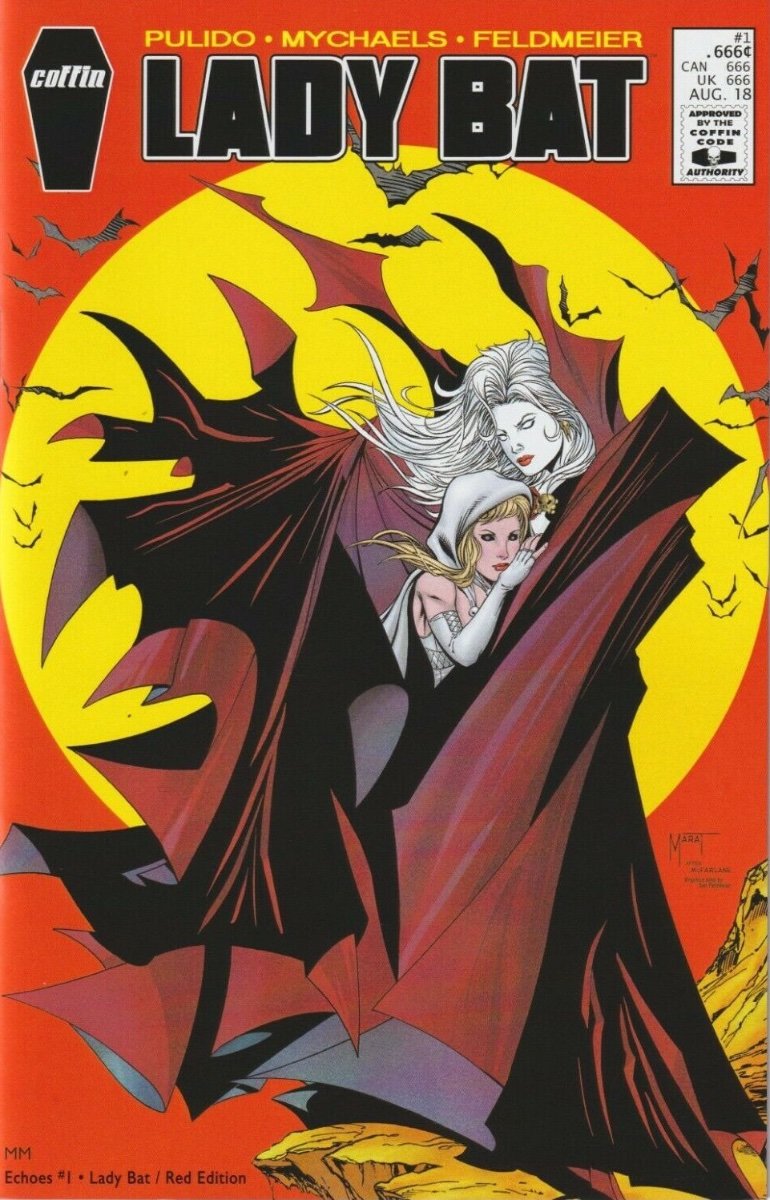
  11. They are different variants.  Like most things Lady Death, there was a lot of variants for this issue.  Unfortunately, #1-I has the image for one variant and a description of another.  #1-I should look more like this:


    864541792_ladybatred.thumb.jpeg.fd7d62c6c22be24c9c4504ce3144d19d.jpeg

    In the lower left corner, of this image, there is an "MM" for Marat Mychaels, the artist.  It was likely limited to 15 copies described as artist proofs.  The regular red edition was limited to 175 and had the individual number on each issue in place of "MM."  

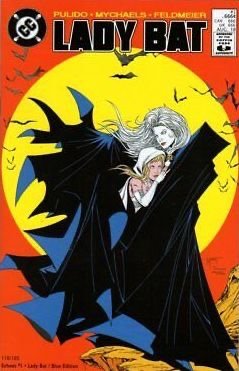
    #1-J has the correct cover and description:

    1544502059_ladybatblue.jpeg.a2f2acbb356c73e41dc7e232ccbe475b.jpeg

    The blue edition was limited to 185 copies, also numbered in the lower left corner.  There was also an artist proof edition with the "MM" in place of the limitation and it was likely limited to 15 copies as well.  

    The are also the printing error edtions that have the faded appearance.  

  12. ·

    Edited by Douglas W. McCratic
    First version was only half baked.

    Straight from DC's website: "In celebration of its 85th anniversary, DC Comics reprints for the very first time its first-ever published comic book, New Fun #1, the comic that transformed the fledgling industry by being the first ongoing title made up of new stories instead of reprints of newspaper comic strips."  So the New Fun is the first and only version so far of that particular reprint.  

    Using the GCD, C-62 was "All-New Collectors' Edition" and was all related to, but not an adaptation of, Superman The Movie. Apparently tabloid sized and the C-62 was used in the indicia.  

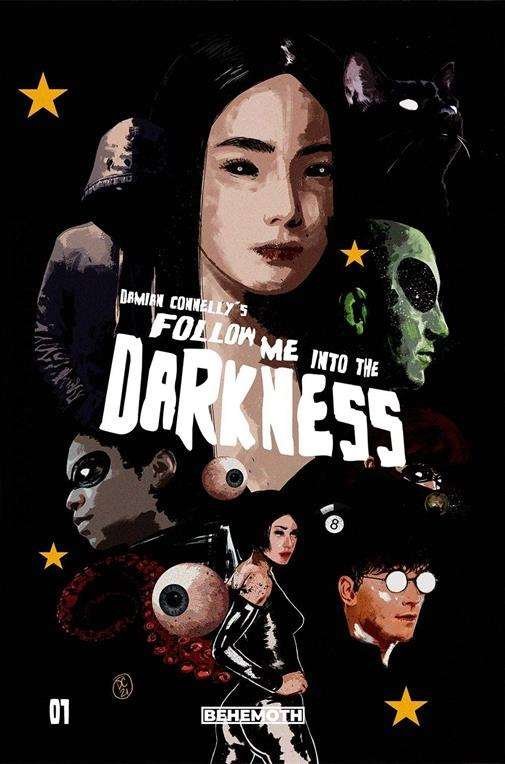
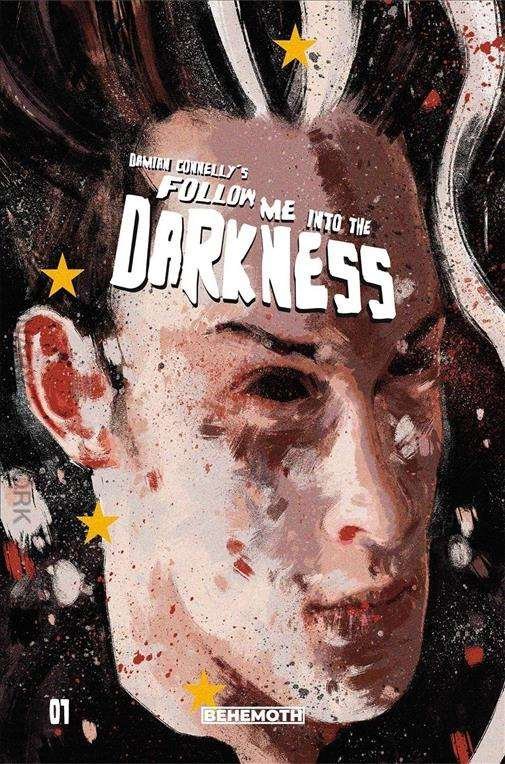
  13. Follow Me Into Darkness #1-B and #1-C have the pics reversed.  I didn't think changing pics would be picked up as a correction, so I traded UPC codes instead. 

    The issue below should be UPC 85002766716400131 and is labeled Cover C on the back

    image.thumb.jpeg.9e09b4e01295ef812dbdcff3df63116d.jpeg


    The issue below should have UPC 85002766716400121 and is labeled Cover B on the back

    image.thumb.jpeg.b4d1f93698df3a3a7e6803f3ed3e91a4.jpeg

  14. Over the last few updates (4 or 5?) I've been having the same error occur.  CB confirms that a new update is available and I begin the download process.  The new pane opens and the status bar appears and it reads "initializing."  That is all that is does, no progress, nothing at all.  I cancel the download and receive a message to the effect of "there was a problem with the update, it may not be fully uploaded" or something similar.  I clear the error message, immediately check for updates again, initiate the process and it works like a charm.  I'm using v22.0.1.1601. 

  15. My experience has been that they are slow to ship, ship the wrong items, and then are impossible to contact.  They do occasionally hit upon a good idea, though.  John Romita Sr. and Alex Ross have done some sketch covers for them and both are near impossible to get sketches from at all.  

    If I'm getting anything produced by them, it's definitely going to be on the secondary market.  

  16. 3 hours ago, Steven L. Dasinger said:

    I don't think there was any regular issue. Just the 250 numbered ones (and 25 Artist's proofs).

    Correct.  The name on the cover indicates "Ashcan" but I would compare them to mini comics.  The paper is slightly heavier than copy paper.  I would guess that they were made on a what was a high end copier at the time and are roughly 5.5" x 8.5"   I'm not certain how they were distributed but think that I remember ordering them at my local shop.  It has been far too long on a very obscure book. 

  17. 5 hours ago, Gregory Hecht said:

    It really is only just a difference in the numbering.  If the 250 run were officially signed and the Artist's Proof copies were not (or vice versa) I'd get the rationale for making them separate items in the database.  But that doesn't seem to be the case here.  

    Agreed.  They're all signed.  I've only seen one AP come up for sale and, as I recall, the price was not significantly different from any of the numbered copies.  I'm not sure what it is about Moebius, but anything he signed seems to hold value far better than most. 

  18. 12 hours ago, Steven L. Dasinger said:

    That makes sense. On the back covers, they are also numbered with the max number being 250, which would mean there would be an additional (unnumbered?) 25 Artist's Proofs.

    This is correct.  The limited edition is 250, numbered 1-250.  Artist Proofs are generally the first copies, but given that these are more or less photo copies there is no real difference in quality between the first copies and the last copies.  I have a few Artist Proofs of other items and they are numbered similar to "AP/25."  In comics, there is generally no real difference between the regular run and artist proofs.  The proofs tend to be given to the creator(s) of the material. 
    In the art world, Artist Proofs can take on a different meaning.  They are often the first prints reproduced and sent to those involved in the production of the print/lithograph in order for them to verify the quality, paper, colors, and anything else that may arise.  AP's are usually more desirable because they are a smaller limitation of an already limited edition. 

    Quote

    If that is the case, would there be cause for both a 1 (limited to 250 and 1/A (or some other variation) for the Artist's Proofs?


    As a rule, no.  There is no discernible difference aside from the numbering. 

Account

Navigation

Search

Search

Configure browser push notifications

Chrome (Android)
  1. Tap the lock icon next to the address bar.
  2. Tap Permissions → Notifications.
  3. Adjust your preference.
Chrome (Desktop)
  1. Click the padlock icon in the address bar.
  2. Select Site settings.
  3. Find Notifications and adjust your preference.